
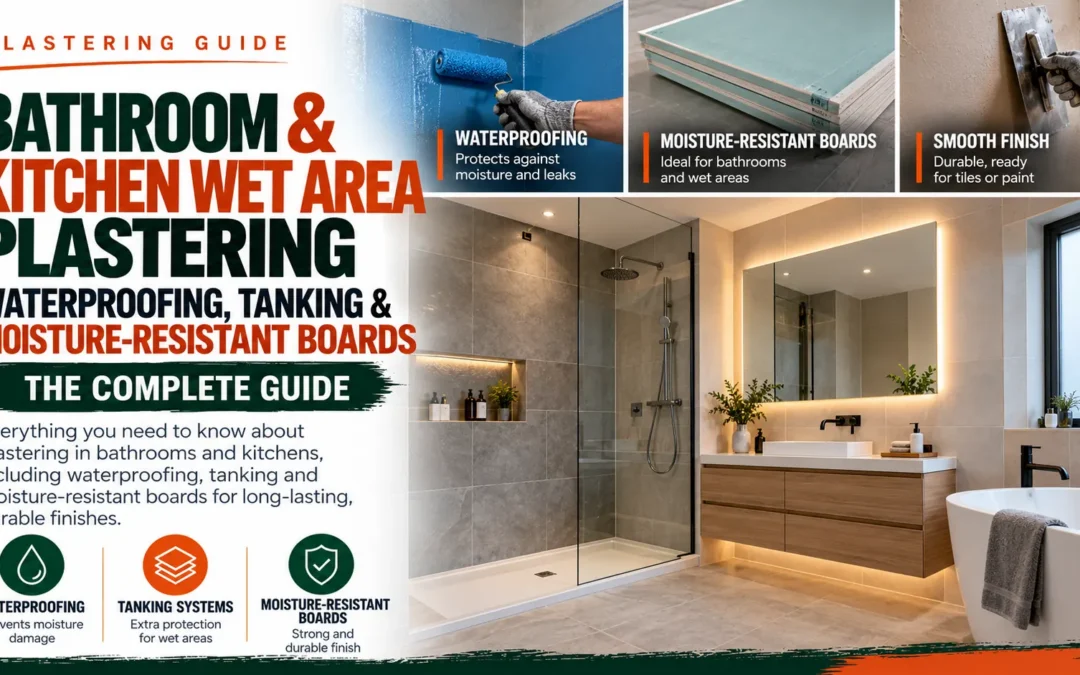
Why Wet Areas Need a Different Approach to Plastering
Standard gypsum plaster and moisture don't mix. Bathrooms, en-suites, and kitchen splashback zones present a genuinely different plastering challenge to the rest of the house — sustained humidity, direct water contact, and frequent temperature changes that ordinary plaster specification simply isn't designed to handle. Get this wrong and the result isn't a cosmetic annoyance; it's crumbling plaster, failed tiling, and hidden mould growth within the wall structure itself.
Understanding the Three Zones of Water Exposure
UK wet room and bathroom guidance generally recognises different zones of exposure within the same room, and the correct plastering and waterproofing specification depends on which zone you're working in:
Zone 1 — Direct water contact: Inside the shower enclosure or bath surround, walls receiving direct spray or splash. This zone requires full waterproofing (tanking) behind any tiled finish, without exception.
Zone 2 — Splash zone: Areas adjacent to Zone 1, such as walls beside a bath or basin, receiving occasional splash but not direct sustained water contact. Moisture-resistant boarding and appropriate sealing is generally sufficient here.
Zone 3 — Ambient humidity zone: The remainder of the bathroom, affected by steam and humidity but not direct water contact. Standard moisture-resistant plasterboard with appropriate mist coating and paint is usually adequate.
Kitchens follow similar logic around sink splashback areas and behind hob surfaces, though typically at a smaller scale than a full bathroom.
Tanking: What It Actually Is and When It's Essential
Tanking is a waterproof membrane or coating applied directly to the wall (or floor) substrate, beneath the tile adhesive, creating a genuinely waterproof barrier rather than relying on grout and tile joints alone to keep water out.
Why Tiles and Grout Alone Aren't Enough
Grout is not fully waterproof, and over time, hairline cracks develop in grout lines through normal thermal movement and everyday use. Without tanking behind the tiles, water gradually finds its way through these joints into the plaster or plasterboard beneath — leading to hidden damage that isn't visible until tiles start to loosen or plaster begins to fail structurally.
The Tanking Process
- Substrate preparation — ensuring the wall (moisture-resistant board or appropriately prepared plaster) is sound, clean, and free of dust
- Corner and joint reinforcement — waterproof tape applied to internal corners and floor/wall junctions, the most vulnerable points for water penetration
- Membrane application — a liquid waterproof membrane (or in some systems, a waterproof board system) applied in multiple coats across the whole wet zone
- Curing — allowing the membrane to fully cure per manufacturer guidance before tiling begins
- Tiling directly onto the cured tanking membrane
Skipping or rushing any of these steps — particularly corner reinforcement, the single most common tanking failure point — compromises the entire system's effectiveness.
Moisture-Resistant Plasterboard: What Makes It Different
Standard plasterboard has a paper facing that readily absorbs moisture, making it entirely unsuitable for bathroom and wet kitchen zones. Moisture-resistant plasterboard (often green-faced) is manufactured with additives and a different facing that significantly reduces moisture absorption, making it the correct base substrate for Zone 2 and Zone 3 areas.
Important distinction: moisture-resistant plasterboard reduces moisture absorption — it is not itself a full waterproofing system. In Zone 1 direct-contact areas, moisture-resistant board still requires tanking on top before tiling; the board alone is not sufficient protection against direct, sustained water contact.
Plastering Over Moisture-Resistant Boards
Once moisture-resistant board is fitted and correctly taped at joints, standard skim plastering can proceed in Zone 3 (ambient humidity) areas not receiving direct water contact, following the same scrim taping and skim coat approach covered in our substrate guide.
For Zone 1 and Zone 2 areas destined for tiling, plaster skim finish typically isn't needed at all — tiles are usually fixed directly onto the tanked, prepared board surface rather than over a skim coat, since the tile adhesive itself provides the final surface bond.
Common Wet Area Plastering & Waterproofing Failures
Failure 1: Standard Plasterboard Used in Wet Zones
Using ordinary plasterboard instead of moisture-resistant board in a bathroom is a common cost-cutting shortcut that leads to swelling, crumbling, and mould growth within the board itself, often invisible until tiles begin to loosen.
Failure 2: Missing or Inadequate Corner Tanking
Internal corners (particularly the corner where a shower tray meets the wall, or floor-to-wall junctions) are the single most common tanking failure point. Skipping reinforced tape at these junctions, even with an otherwise correctly applied membrane, leaves a direct path for water penetration.
Failure 3: Tiling Before Tanking Has Fully Cured
Tiling onto an incompletely cured membrane can compromise the waterproof barrier's integrity, even if it appears touch-dry on the surface — manufacturer cure time guidance should always be followed precisely, not estimated.
Failure 4: Ignoring Extractor Fan and Ventilation Requirements
Even a perfectly tanked and plastered bathroom will develop condensation-related mould on non-tiled surfaces (ceiling, non-tiled walls) if ventilation is inadequate. Wet area plastering specification and bathroom ventilation need to be considered together, not separately — see our mould and condensation guide for the ventilation side of this issue.
Failure 5: Skim Plastering Directly Over Standard Plasterboard in a Steam-Heavy Room
Even outside direct splash zones, a badly ventilated bathroom with standard (non-moisture-resistant) board and ordinary skim finish is highly prone to paint failure and mould growth from sustained ambient humidity alone.
Kitchen-Specific Wet Area Considerations
Kitchens generally require a less extensive waterproofing specification than bathrooms, but specific zones still need attention:
- Sink splashback area — moisture-resistant board as a minimum; full tanking if a tiled splashback extends behind a tap with direct water contact
- Behind hob/cooker area — heat-resistant and moisture-resistant considerations combine here, particularly with gas hobs generating additional ambient humidity from cooking
- Utility areas with washing machines/dishwashers — worth treating similarly to a bathroom Zone 2/3 approach given the sustained humidity and occasional leak risk these appliances present
Wet Area Specification Comparison
| Zone/Area | Water Exposure | Board Type | Waterproofing Required | Finish |
| Shower enclosure (Zone 1) | Direct, sustained | Moisture-resistant board | Full tanking membrane | Tiled directly onto tanking |
| Bath surround (Zone 2) | Splash, occasional | Moisture-resistant board | Tanking recommended, essential if tiled | Tiled or painted |
| General bathroom walls (Zone 3) | Ambient humidity | Moisture-resistant board | Not required | Skim + mist coat + paint |
| Kitchen sink splashback | Splash, occasional | Moisture-resistant board | Tanking if tiled with direct contact | Tiled or painted |
| Utility/appliance area | Ambient + occasional leak risk | Moisture-resistant board | Recommended | Skim + paint or tiled |
Renovating an Older Bathroom: What to Check First
Older properties, particularly Victorian and Edwardian bathrooms retrofitted decades ago, often reveal problems once existing tiles and plaster are removed:
- No existing waterproofing at all behind old tiles — common in pre-1980s bathrooms, where tiles were simply fixed onto bare plaster with no membrane
- Hidden water damage behind old tiling, sometimes extending into the substrate significantly further than visible staining suggests
- Outdated or missing extractor ventilation, contributing to long-term condensation damage independent of any direct leak
A full strip-back and reassessment during bathroom renovation — rather than tiling over existing surfaces — is almost always the right approach on older properties, even though it adds time to the project.
Frequently Asked Questions
Q: Do I need tanking in every bathroom, or just showers? A: Full tanking is essential in direct water contact zones (inside a shower enclosure, bath surround if tiled). General bathroom walls away from direct splash generally only need moisture-resistant board, not full tanking.
Q: Can I skim plaster directly over a shower area instead of tiling? A: Not recommended for direct water contact zones — plaster, even moisture-resistant, isn't a substitute for a genuinely waterproof tiled and tanked surface where sustained direct water contact occurs.
Q: How long does tanking membrane need to cure before tiling? A: This varies by specific product, typically ranging from a few hours to 24+ hours per coat, with multiple coats often required — always follow the specific manufacturer's guidance rather than a generic assumption.
Q: Is moisture-resistant plasterboard enough on its own for a bathroom, or do I always need tanking as well? A: Moisture-resistant board is sufficient on its own for ambient humidity zones (Zone 3) not receiving direct water contact. Any area receiving direct or sustained splash (Zone 1/2) needs tanking on top of the moisture-resistant board before tiling.
Q: What causes tiles to loosen in a bathroom years after installation? A: Most commonly, water has penetrated through grout lines or an inadequately tanked corner over time, gradually degrading the adhesive bond or the substrate beneath — a slow, hidden process that eventually shows as loosening tiles.
Key Takeaways
- Understand your wet room zones — Zone 1 (direct contact) always needs full tanking; Zone 3 (ambient) generally doesn't
- Moisture-resistant board is not a substitute for tanking in direct water contact areas — the two work together, not instead of each other
- Corner and junction reinforcement is the most common tanking failure point — never skip it
- Follow manufacturer cure times exactly before tiling over tanking membrane
- Ventilation matters as much as waterproofing — even perfect tanking won't prevent condensation mould on non-tiled surfaces in a poorly ventilated room
- Older bathrooms often have no existing waterproofing — full strip-back and reassessment is usually the right renovation approach
Planning a bathroom or kitchen renovation in Sutton, South London, or Surrey? DCB Plastering Services specifies correct wet area boarding, tanking coordination, and plastering for lasting, mould-free results. 35 years of wet room experience.