
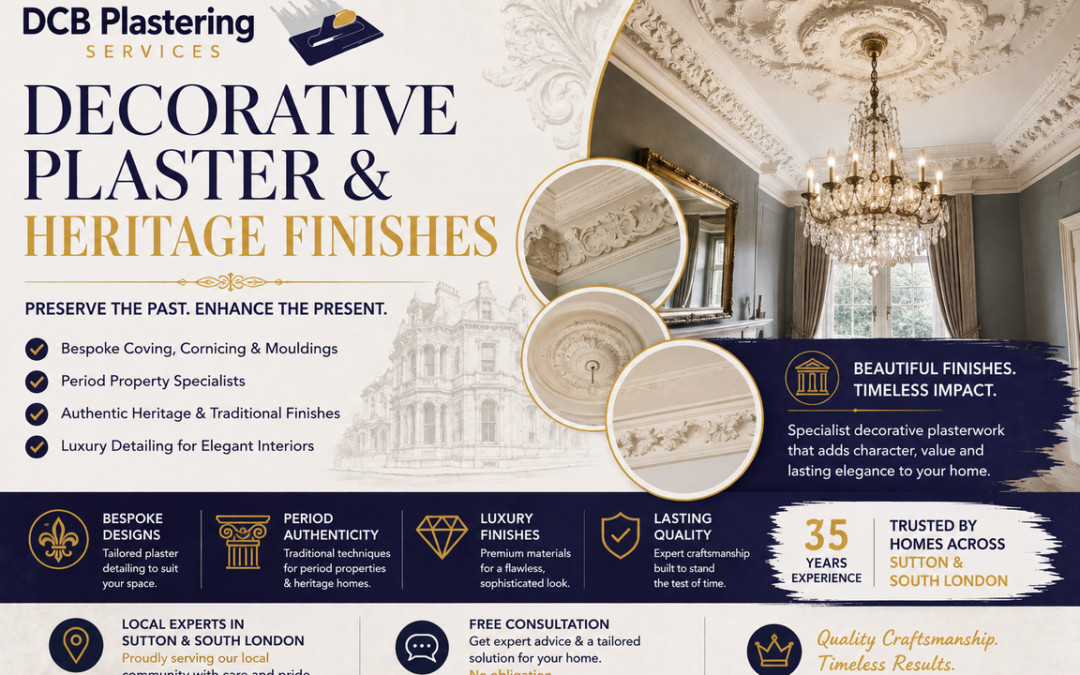
Most modern homeowners think plaster is utilitarian—flat walls, smooth ceilings, practical finishes. They miss the deeper craft. For 400 years, decorative plaster was considered luxury architectural art, reserved for estates and high-status homes. Victorian and Edwardian periods saw plasterwork reach its zenith: ornamental cornicing, coffered ceilings, decorative coving, relief panels, and bespoke ceiling designs that defined rooms.
Today, decorative plaster is experiencing renaissance—not as museum recreation, but as modern luxury finishing touch. Homeowners in Sutton, South London, and Surrey are reclaiming this craftsmanship for contemporary interiors, period restorations, and bespoke design projects. Many homeowners start by removing outdated artex ceilings before upgrading to decorative finishes.
This is where skilled plasterers distinguish themselves from commodity services.
Types of Decorative Plaster & Heritage Finishes: What's Possible
1. Period Cornicing & Ceiling Coving (Most Popular)
Cost: £30-80 per linear metre (materials + installation labour)
Cornicing (crown moulding) softens ceiling-to-wall transition, adds architectural interest, and defines period character. Traditional in Georgian, Victorian, Edwardian, and Edwardian Revival homes.
Material options:
- Plaster cornicing (authentic, mouldable to period profile): £40-80/metre
- Polyurethane coving (cheaper, modern alternative): £20-40/metre
- Fibrous plaster (mid-range, durable): £30-60/metre
Installation complexity: Moderate (requires precision fitting, angle cuts, adhesive skill). Professional installation non-negotiable (DIY failures obvious and costly).
Best for: Period properties (Victorian Clapham terraces, Edwardian semi-detached in Sutton), upmarket modern homes, heritage restorations.
Customer insight: "Cornicing transformed our 1920s lounge from tired to period-grand. £2,000 investment felt like adding £10,000 value." (Battersea homeowner)
2. Coffered Ceilings (Statement Feature)
Cost: £2,000-8,000+ (entire ceiling, depending on complexity)
Coffered ceilings feature recessed geometric panels (boxes) creating three-dimensional, sculptural effect. Historically luxury feature; modernly, dramatic design statement.
Design variations:
- Classic square coffers (traditional): Moderate cost, timeless appeal
- Herringbone pattern (complex): Higher cost, visual drama
- Octagonal or hexagonal (custom): Premium bespoke cost
- Decorative relief (ornament details): Maximum luxury
Application complexity: Very high. Requires:
- Precise geometric planning (digital layout pre-installation)
- Plasterboard framework installation (carpentry-level skill)
- Plaster detailing + finishing (high artisan skill)
- Professional finish + paint (flawless execution)
Timeline: 2-4 weeks (one ceiling)
ROI perspective: Coffered ceilings elevate entire room perception from "nice" to "wow." In pre-sale context, can justify 5-8% price increase on high-end properties.
Best for: Open-plan reception rooms, formal dining rooms, luxury home renovations, commercial spaces (hotels, restaurants).
3. Relief Plaster Panels & Decorative Inserts
Cost: £1,500-5,000+ (depending on size + complexity)
Relief panels create dimensional artwork within walls/ceilings—floral motifs, geometric patterns, artistic scenes rendered in plaster.
Applications:
- Overmantel panels (above fireplaces): £800-2,000 each
- Wall feature panels (accent walls): £1,500-3,500
- Ceiling medallions (around central light fixtures): £400-1,200
- Custom artistic scenes (bespoke commissions): £3,000-8,000+
Artisan detail: This is where plaster becomes art. Skilled plasterers sculpt freehand or from templates, creating unique home features that showcase owner taste + investment.
Best for: Period restorations (matching original plasterwork), luxury upmarket homes, collectors/enthusiasts of historical design.
4. Venetian Plaster & Polished Finishes (Luxury Wall Treatments)
Cost: £50-150 per m² (premium material + technique-intensive labour)
Venetian plaster is multi-layered, hand-trowelled finish creating depth, light reflection, and luxurious appearance. Originated in Venice (hence name); technique unchanged for 500 years.
Characteristics:
- Silky, smooth, polished surface (no paint needed)
- Light-sensitive (changes appearance throughout day)
- Durable (lasts 10-20+ years without repainting)
- Moisture-resistant (suitable for bathrooms, kitchens)
- Bespoke colour options (pigmented plaster, not painted)
Application: Extremely labour-intensive (requires mastery; cannot be rushed). 3-5 coats applied by hand, each buffed and polished. Professional application mandatory—amateurish Venetian is obvious disaster.
Best for: Feature walls, luxury bathrooms, high-end residential design, commercial hospitality spaces.
Customer testimonial: "Our Venetian plaster feature wall in the master bedroom cost £800 but looks like £5,000 investment. Guests constantly ask who the designer was." (Wimbledon homeowner)
5. Decorative Plaster Ceiling Roses & Medallions
Cost: £200-800 each (depending on size + ornament complexity)
Ceiling roses (ornamental features around central light fixtures) add period charm and visual interest. Available in simple/elaborate styles.
Options:
- Simple modern rose (subtle, contemporary): £200-400
- Traditional Victorian rose (elaborate, period-authentic): £400-700
- Ornate heritage rose (highly decorative, maximum detail): £600-1,200
Installation: Requires careful centring, secure fixing, seamless plaster integration. Professional installation essential (visible installation errors diminish aesthetic value).
ROI: Disproportionately high. Ceiling roses cost £300-500 but create perception of £2,000+ investment. Excellent value in pre-sale context.
Heritage Plasterwork Restoration: Preserving Period Authenticity
Challenge: Matching Original Plasterwork
Victorian and Edwardian homes contain original plasterwork—cornicing, ceiling roses, dado rails, relief panels—created by craftsmen 120+ years ago. When redecorating or renovating, homeowners face question: restore original, or modernise?
Restoration benefits:
- Preserves period authenticity (listed building requirement often)
- Maintains architectural integrity (original design intent)
- Increases property value (heritage features highly desirable)
- Aligns with conservation guidelines (if applicable per RIBA restoration standards)
Challenge: Finding plasterers skilled in heritage restoration is difficult. Modern plasterers trained in commodity finishes, not bespoke period matching.
Our Heritage Restoration Approach
1. Diagnostic Assessment
- Photograph original plasterwork details
- Identify period style (Georgian, Victorian, Edwardian, Art Deco, etc.)
- Measure profile dimensions (for accurate reproduction)
- Assess condition (repairable vs replacement required)
2. Materials Sourcing
- Period-appropriate plaster types (lime vs gypsum, dependent on original)
- Matching aggregate/filler (if original identifiable)
- Authentic pigmentation (if decorative elements present)
- Correct application techniques (hand-applied vs modern methods)
3. Skilled Execution
- Experienced heritage plasterers execute work
- Seamless integration with existing plasterwork
- Quality control at each stage
- Professional finishing (paint/seal matching original appearance)
4. Compliance & Documentation
- Listed Building Consent coordination (if applicable)
- Conservation officer liaison
- Documentation of work (photographic record)
- Guarantees (12-24 month workmanship warranty)
Realistic cost premium: Heritage restoration costs 30-50% more than modern equivalent due to material sourcing, expertise, and time investment. Justified by value preservation.
Decorative Plaster Case Studies: Real Sutton & South London Transformations
Case Study 1: Victorian Terrace Period Restoration (Clapham)
Client brief: Clapham Victorian terrace (1890s) with original cornicing, ceiling roses, and relief wall panels. Previous owners had removed some features; goal was period-accurate restoration using lime plaster for listed buildings compliance.
Our solution:
- Photographed original features remaining (dining room cornicing, bedroom ceiling roses)
- Commissioned heritage plaster moulds (matching original profiles)
- Installed matching cornicing throughout (3 rooms)
- Restored ceiling roses (3 original features replaced)
- Applied period-appropriate finish + paint (soft heritage colours)
Timeline: 3 weeks Investment: £4,500 Result: Period authenticity fully restored; property value increased estimated £12,000-15,000 (heritage features highly desirable in Clapham market). See how professional plaster investments add property value.
Client feedback: "Sold 8 weeks later at asking price. Buyers specifically mentioned period restoration as key deciding factor."
Case Study 2: Modern Luxury Home—Coffered Ceiling Feature (Wimbledon)
Client brief: Contemporary 2020s new-build home. Open-plan reception room (8m × 6m). Client desired "wow factor" without period pastiche. Goal: modern luxury aesthetic with architectural drama.
Our solution:
- Designed coffered ceiling (square pattern, 12 months spacing)
- Installed plasterboard framework (structural engineering)
- Detailed plaster finish (contemporary smooth vs ornate)
- Neutral colour (matte off-white, subtle definition)
Timeline: 4 weeks Investment: £5,200 Result: Dramatic architectural feature transforming reception room from ordinary to memorable. Interior magazine photography-worthy.
Feedback: "Creates conversation piece. Feels like £20,000+ design investment but cost £5,200. Best renovation decision we made."
Case Study 3: Venetian Plaster Feature Wall (South Wimbledon)
Client brief: Contemporary bedroom renovation. Desired luxury spa-like aesthetic. Goal: feature wall creating focal point without artwork.
Our solution:
- Venetian plaster feature wall (polished finish, warm grey pigmentation)
- Coordinating neutral plaster finish on remaining walls
- Professional lighting design (highlighting Venetian surface sheen)
Timeline: 2 weeks Investment: £1,200 (premium material + technique-intensive labour) Result: Luxurious, sophisticated feature creating visual drama and tactile interest. Natural light transforms appearance throughout day.
Decorative Plaster vs Standard Plaster: Why The Difference Matters
| Aspect | Standard Plaster | Decorative Plaster |
| Finish | Smooth, flat, uniform | Textured, dimensional, detailed |
| Labour skill | Moderate (skim coat training) | High (artisan, bespoke design) |
| Timeline | 2-5 days per room | 1-4 weeks per feature |
| Material cost | £4-10/m² | £20-150/m² (premium materials) |
| Visual impact | Practical, backdrop | Statement feature, conversation piece |
| Longevity | 15-20 years (requires repainting) | 20-50+ years (durable, distinctive) |
| ROI | Cost-neutral (maintenance) | 200-400% (luxury premium) |
| Best for | Rental properties, budget renovations | Owned homes, heritage properties, luxury projects |
Key insight: Decorative plaster isn't budget option—it's investment in permanent, distinctive home features that increase property value, durability, and aesthetic impact.
Decorative Plaster Design Consultation: How We Help
Professional design service (optional, £300-500 consultation fee):
- Site visit + assessment (understand space, light, existing architecture)
- Design concepts (mood board, sketches, digital renderings)
- Material samples (Venetian finishes, coving profiles, colour options)
- Technical specifications (installation method, timeline, cost breakdown)
- Heritage research (if period restoration, archive original design if available)
Decorative Plaster FAQ
Q: Is decorative plaster suitable for modern homes or only period properties?
A: Both. Modern homes benefit enormously—coffered ceilings, relief panels, Venetian walls create luxury ambiance in contemporary spaces. Pairs beautifully with minimalist design.
Q: How long does decorative plasterwork last?
A: Well-executed plaster lasts 30-50+ years without degradation (unlike paint requiring refresh every 5-7 years). Venetian plaster especially durable. Structural integrity excellent if properly installed.
Q: Can I DIY decorative plaster?
A: Not recommended. Cornicing installation requires precision carpentry + plaster skill. Relief panels, coffered ceilings, Venetian plaster require professional artisan expertise. Amateurish work obvious; costs more to fix than professional execution upfront.
Q: What's the most affordable decorative plaster option?
A: Ceiling roses (£200-400) offer maximum visual impact for minimum investment. Cornicing (£30-80/metre) excellent value. Both create architectural interest without premium cost.
Q: Do I need listed building consent for decorative plaster?
A: Depends. Adding decorative plaster (new features) typically doesn't require consent. Replacing existing period plasterwork requires conservation officer sign-off (usually approved if period-authentic). Always check local planning authority.
Key Takeaways
- Decorative plaster transforms spaces from ordinary to distinctive
- Costs range £200-8,000+ depending on complexity (roses to coffered ceilings)
- ROI exceptional (200-400% value increase in pre-sale context)
- Heritage restoration possible (period-authentic matching available)
- Professional expertise essential (DIY failures costly + obvious)
- Durability outstanding (30-50+ year lifespan vs paint 5-7 years)
For bespoke decorative plaster design consultation and installation across Sutton, South London, and Surrey, contact DCB Plastering Services. 35 years experience in luxury finishes, heritage restoration, and custom design. Portfolio available. Free consultation.